
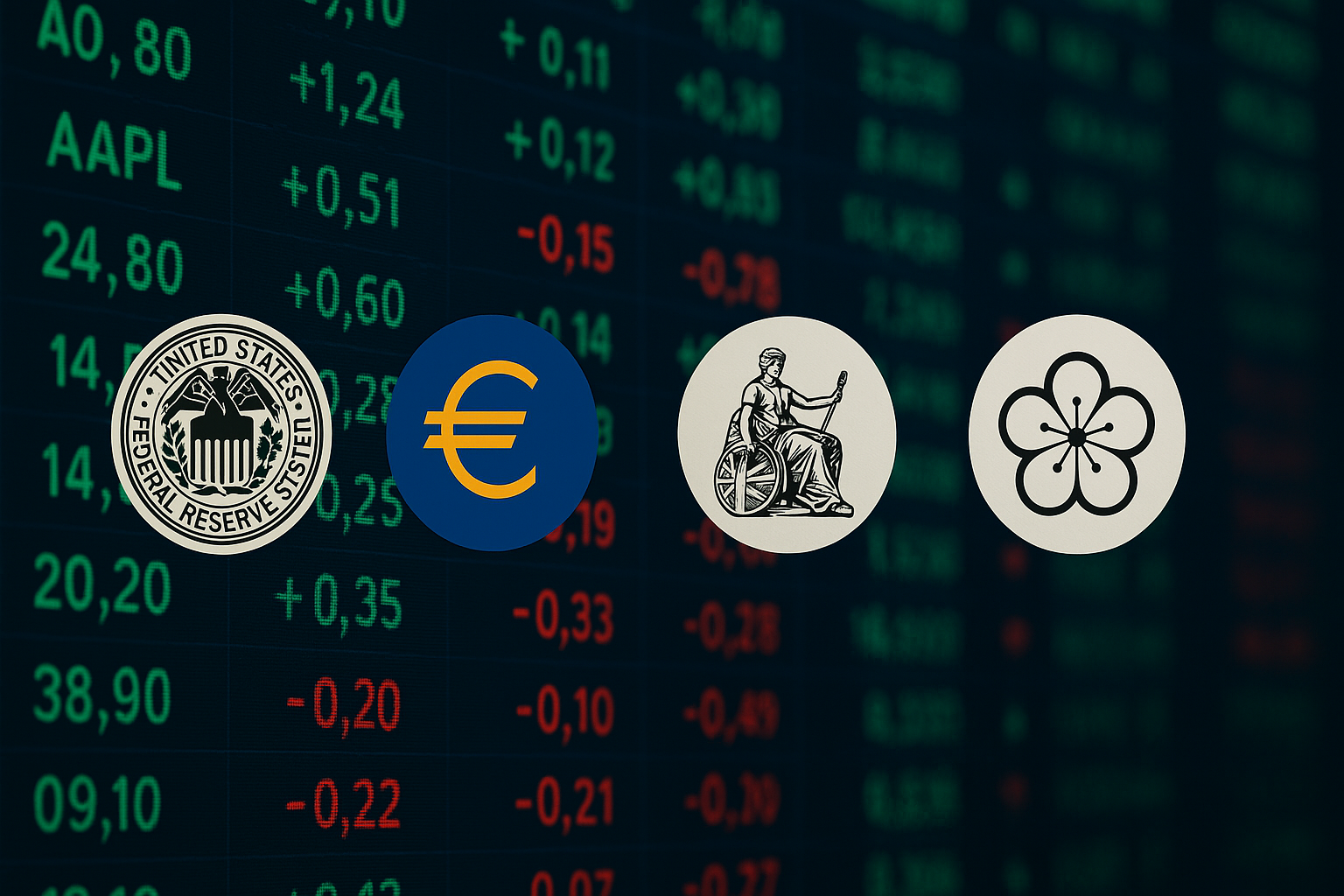
Understanding the dynamics between stock markets, central banks, interest rates, and inflation is crucial for any investor aiming to maximize returns and minimize risks. This article dives into how these elements interact and influence investment decisions, providing valuable insights for both novice and seasoned investors.
- Importance of Central Banks
- Impact of Interest Rates
- Inflation and Market Response
- Strategies for Investors
- Frequently Asked Questions
- Investor Perspective
Importance of Central Banks
Central banks, like the Federal Reserve in the U.S., play a pivotal role in economic stability by controlling monetary policies. They have the power to influence the economy by adjusting interest rates and implementing measures like quantitative easing. For example, during the late 2000s financial crisis, central banks lowered interest rates to stimulate economic activity, a strategy still relevant today.
Central banks also serve as regulators of the banking industry, ensuring financial stability. By influencing economic conditions, central banks can impact stock market performance. Investors closely watch central bank meetings for signs of policy changes that could affect the market.
Why It Matters
Policies shaped by central banks often determine the liquidity in the financial system, impacting investors’ ability to secure funds for investments. The recent policy adjustments in 2024, aimed at curbing inflation, exemplify their influence on stock market movements and investor confidence.
Impact of Interest Rates
Interest rates are a critical tool in monetary policy. When central banks modify these rates, they affect borrowing costs, economic expansion, and, subsequently, stock markets. Typically, lower interest rates encourage borrowing and spending, boosting economic growth and stock prices. Conversely, higher rates tend to slow economic activities as borrowing costs rise.
Understanding Rate Adjustments
In 2025, an observable rise in interest rates was aimed at slowing inflation. This impacted broader economic activities, including a slight dip in consumer spending. Investors need to anticipate such changes and adjust their portfolios to mitigate risks associated with rising borrowing costs.
Investment Tip
Inflation and Market Response
Inflation is another influential factor in stock markets. Defined as the rate at which the general level of prices for goods and services rises, eroding purchasing power, inflation directly impacts consumers and businesses. An environment of sustainable inflation suggests a growing economy, but hyperinflation poses risks that can destabilize markets.
Case Study: Inflation Trends
The inflation data for 2026 shows a gradual increase, prompting central banks to strategize on maintaining it within target ranges. Significant inflation spikes often lead to tightening policies by central banks, affecting stock market liquidity. Investors should employ inflation-hedged investments, like Treasury Inflation-Protected Securities (TIPS), for stable returns.
Strategies for Investors
Given the impact of these economic elements, investors should adopt strategies to safeguard their portfolios. Diversification remains key in managing risks associated with inflation and interest rate fluctuations.
Practical Investment Strategies
- Diversification: Mix asset types to spread risks and capitalize on different market conditions.
- Inflation-Protection: Consider assets like commodities and real estate that traditionally perform well during inflationary periods.
- Interest Rate Watch: Regularly monitor rate forecasts to anticipate market shifts.
Frequently Asked Questions
How do central banks influence stock markets?
Central banks adjust interest rates and implement monetary policies that determine the flow of money in the economy. These adjustments can lead to increased liquidity, boosting stock market activities, or do the opposite when contracting the money supply.
What is the correlation between interest rates and stock prices?
Generally, lower interest rates make borrowing cheaper, encouraging spending and investment, which can drive stock prices up. Meanwhile, higher rates increase borrowing costs, potentially leading to decreased spending and falling stock prices.
Why is inflation significant to investors?
Inflation affects purchasing power and can influence central bank policies. High inflation may lead central banks to increase interest rates, impacting stock market performance. Investors need to consider inflation when making investment decisions to preserve the value of their investments.
What’s the best way to protect investments from inflation?
Diversifying into inflation-protected assets such as TIPS, commodities, or real estate can help protect investments. These assets often maintain or increase in value even when inflation rises, providing a hedge against diminishing purchasing power.
Investor Perspective
Investors today must grasp the intricate dance between central banks, interest rates, and inflation to navigate stock markets effectively. Understanding how these entities interact and influence the economic environment is not merely academic but a practical necessity for safeguarding investments and optimizing returns. By staying informed and flexible, investors can better adapt to inevitable market shifts and achieve their financial goals.

Autor
Posts relacionados

The Impact of Central Bank Policies on Stock Markets: Insights for European Investors
- 0
- 816 words
Introduction Standing at the convergence of fluctuating interest rates, inflation concerns, and central bank maneuvers, European investors face a complex landscape. Whether...
Leia tudo
How Energy Prices Affect Stock Markets and Government Spending
- 0
- 840 words
How Energy Prices Affect Stock Markets and Government Spending The intricate relationship between energy prices, stock markets, and government spending shapes global...
Leia tudo
Navigating the Future of Digital Assets: Insights into Cryptocurrencies and European Regulations
- 0
- 835 words
As the world becomes increasingly digital, understanding cryptocurrencies like Bitcoin and Ethereum, along with the regulatory landscapes shaping them, is crucial for...
Leia tudo
Understanding the Interplay Between Energy Prices, Stock Markets, and Government Spending
- 0
- 769 words
Introduction As we progress through the decade, the intricate dance between energy prices, stock markets, and government spending remains central to economic...
Leia tudo
Decoding the Financial Impact of Cryptocurrency: Understanding Bitcoin’s Role
- 0
- 988 words
Bitcoin and other cryptocurrencies have sparked endless discussions about their impacts on finance and the global economy. For those invested in financialcustom.com,...
Leia tudo
How Stock Markets React to Changes in Central Bank Interest Rates
- 0
- 962 words
The dynamic interplay between central bank interest rates and stock markets continuously captivates investors and economists alike. Understanding this relationship is not...
Leia tudo