
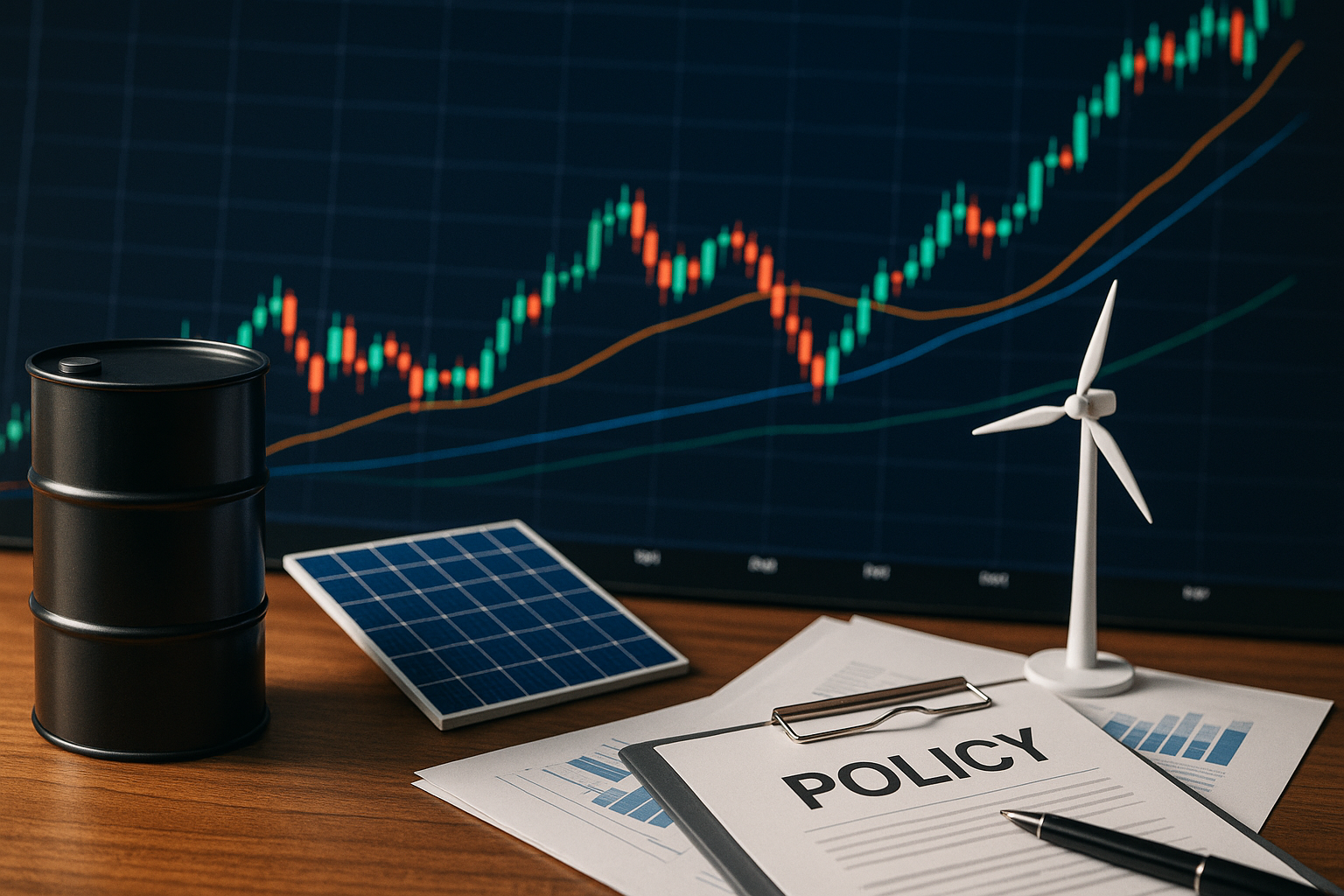
How Energy Prices Affect Stock Markets and Government Spending
The intricate relationship between energy prices, stock markets, and government spending shapes global and local economies. As we project into 2025, comprehending these dynamics helps investors, policymakers, and consumers make informed decisions.
Whether you’re an investor looking to adapt your portfolio or a policymaker planning the fiscal year, this article offers key insights into the symbiotic relationship between these forces. Let’s dive in.
- Energy Price Impact on Stock Markets
- Implications for Government Spending
- Case Studies and Examples
- Expert Opinions
- Strategies for Adaptation
- FAQ
- Key Takeaways
Energy Price Impact on Stock Markets
Energy prices have a profound influence on the stock market. They directly affect the profitability of sectors such as transportation, manufacturing, and agriculture. When energy costs rise, companies in these sectors may experience increased expenses, reducing their profit margins, and potentially their stock value.
Sector-Specific Effects
Sectors reliant on energy-consuming processes, like airlines or heavy manufacturing, are highly sensitive to fluctuations in energy costs. For instance, when oil prices spiked in 2024, the transportation sector saw significant stock declines because increased fuel costs led to higher operating expenses.
Investor Reactions
Investors generally anticipate how energy prices impact sector performance. Rising prices may lead to an increased demand for energy-efficient technologies and alternative energy stocks. Historical data from 2025 indicates that green energy stocks outperformed traditional energy as investors pivoted toward sustainable investments.
This trend supports the growing importance of environmental, social, and governance (ESG) criteria in investment decisions.
Implications for Government Spending
Energy prices also play a critical role in shaping government budgets. When prices spike, governments need to allocate more funds to subsidize energy to cushion consumers. This allocation often affects other public spending areas such as healthcare and education.
Budgetary Adjustments
A surge in energy prices can strain a country’s fiscal budget. For instance, during 2024’s global energy price rises, several governments increased their energy subsidies, leading to budget deficits or reallocation of funds from infrastructure projects.
Long-Term Economic Planning
Governments must balance immediate reactions with long-term economic strategies. This involves investing in renewable energy sources. A case in point is Germany’s Energiewende policy, which aims to transition the country toward a more sustainable energy model, thus minimizing future volatility related to energy imports.
Case Studies and Examples
Consider the impact of the 2024 sanctions on global oil markets. The sanctions caused energy prices to rise, disproportionately affecting countries heavily reliant on oil imports. Stock indices in these countries saw significant downturns, directly linked to investor concerns over increased operational costs in key industries.
| Country | Impact on Stock Index | Government Response |
|---|---|---|
| India | Stock market downturn of 10% | Increased fuel subsidies |
| Japan | Moderate decrease in stock prices | Investment in renewable energy |
Expert Opinions
Dr. Lara Watson, an economics professor at Harvard University, notes that understanding the relationship between energy prices and major economic indicators helps stakeholders adapt to global trends. “The anomalies in energy pricing often parallel other economic movements worldwide,” she states.
These insights align with analyses from the International Energy Agency, which regularly publishes forecasts to guide policy decisions.
Strategies for Adaptation
The volatility of energy prices demands robust strategies from both investors and government bodies. Here are actionable steps for adaptation:
For Investors
- Diversification: Spread investments across different sectors to mitigate risks associated with any single market shift.
- Focus on Sustainability: Align portfolios with green energy, given the growing shift toward sustainable practices.
For Governments
- Invest in Renewable Infrastructure: Reducing dependency on external energy sources can stabilize economic vulnerabilities.
- Implement Policies for Economic Buffering: Setting up financial reserves can help manage unexpected fiscal demands during energy price surges.
FAQ
How do energy prices influence inflation?
Energy prices can significantly impact inflation rates. When they rise, transportation and production costs typically increase, leading to higher prices for goods and services, eventually contributing to inflation.
Can renewable energy help stabilize stock markets?
Yes, investment in renewable energy can reduce market volatility by diversifying energy sources and reducing reliance on fossil fuels, which are prone to price swings due to geopolitical tensions.
Are higher energy prices always reflected in stock market declines?
Not necessarily. While energy price hikes generally lead to increased costs, sectors like renewable energy and energy technology may benefit from higher values due to increased demand for cleaner, efficient alternatives.
What roles do government policies play in stabilizing energy markets?
Governments can stabilize energy markets through strategic reserves, subsidies, and investments in alternative energy. Policies aimed at efficiency and innovation can also mitigate the impact of volatile energy prices.
How can individuals hedge against rising energy costs?
Individuals can hedge by investing in energy-efficient home systems, participating in energy-saving programs, or investing in energy-related stocks that benefit from high prices.
Key Takeaways
Understanding the dynamic between energy prices, stock markets, and government spending offers a strategic advantage for investors and policymakers alike. The shift towards sustainable practices is more than a trend; it’s an adjustment necessary for economic stability in 2025 and beyond. Staying informed, diversified, and proactive is crucial for navigating these complex interactions.

Autor
Posts relacionados

The Impact of Central Bank Policies on Stock Markets: Insights for European Investors
- 0
- 816 words
Introduction Standing at the convergence of fluctuating interest rates, inflation concerns, and central bank maneuvers, European investors face a complex landscape. Whether...
Leia tudo
Navigating the Stock Markets: The Role of Central Banks, Interest Rates, and Inflation
- 0
- 760 words
Understanding the dynamics between stock markets, central banks, interest rates, and inflation is crucial for any investor aiming to maximize returns and...
Leia tudo
Navigating the Future of Digital Assets: Insights into Cryptocurrencies and European Regulations
- 0
- 835 words
As the world becomes increasingly digital, understanding cryptocurrencies like Bitcoin and Ethereum, along with the regulatory landscapes shaping them, is crucial for...
Leia tudo
Understanding the Interplay Between Energy Prices, Stock Markets, and Government Spending
- 0
- 769 words
Introduction As we progress through the decade, the intricate dance between energy prices, stock markets, and government spending remains central to economic...
Leia tudo
How Central Banks Influence Stock Markets: Interest Rates and Inflation Explained
- 0
- 955 words
The intricate relationship between central banks, interest rates, and inflation holds great significance for stock market investors. Understanding these dynamics can provide...
Leia tudo
The Impact of Energy Prices on Stock Markets and Government Spending in Europe
- 0
- 881 words
In the shifting landscape of European economics, energy prices hold a pivotal place, influencing both stock markets and government spending deeply. For...
Leia tudo