
Introduction
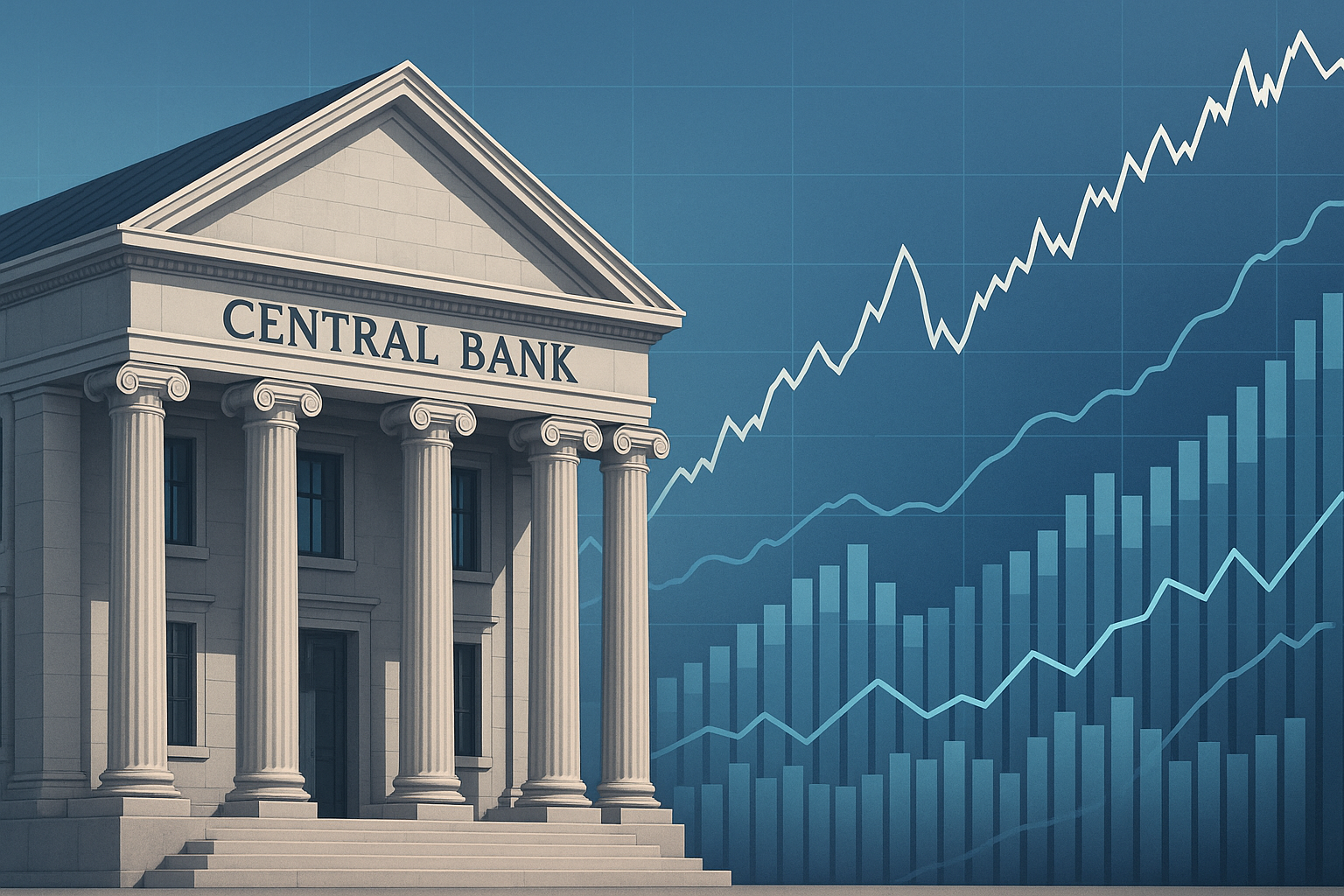
Understanding the intricate dance between central banks, interest rates, and stock markets is pivotal for investors aiming to maximize returns while mitigating risks. Central banks, by manipulating interest rates and tackling inflation, hold the strings to economic growth, market stability, and investor confidence. This guide is tailored for those eager to unravel these dynamics and make informed financial decisions.
- Understanding Central Banks
- Interest Rates and Inflation
- Impact on Stock Markets
- Strategies for Investors
- Real-World Examples
- Frequently Asked Questions
- Conclusion
Understanding Central Banks
Central banks, like the Federal Reserve in the United States and the European Central Bank in the Eurozone, are pivotal institutions responsible for overseeing monetary policy. Their chief aim is to maintain financial stability and foster economic growth by controlling inflation and influencing the availability of credit.
Role and Responsibilities
Central banks employ a host of monetary policies, primarily through adjusting the benchmark interest rates, to ensure economic coherence. By raising or lowering rates, they can influence borrowing costs, consumer spending, and ultimately, the overall economic activity.
Policies from notable entities like the European Central Bank highlight their importance in maintaining price stability. According to recent data, central banks globally aim for an inflation target of around 2–3% annually, a standard that helps buffer economies against volatility.
Independence and Transparency
The independence of these banks ensures unbiased decision-making. For instance, the Federal Reserve regularly holds press conferences detailing policy changes, enhancing transparency and market predictions.
Interest Rates and Inflation
Interest rates and inflation are fundamental levers in the monetary policy toolkit. By tweaking these, central banks attempt to influence economic dynamics, thereby impacting stock markets directly.
Interest Rates Explained
The interest rate is essentially the cost of borrowing money. Lower rates generally stimulate economic growth by making loans cheaper, encouraging businesses to invest and consumers to spend.
| Scenario | Impact on Economy |
|---|---|
| Rising Interest Rates | Decreased borrowing, slower economic growth |
| Falling Interest Rates | Increased borrowing, enhanced economic activity |
Inflation Dynamics
Inflation affects purchasing power; hence, central banks aim to moderate it through policy interventions. Moderate inflation suggests a healthy economy where goods and services are in demand, while hyperinflation can signal an alarming economic tilt.
Impact on Stock Markets
Stock markets are inherently sensitive to interest rate adjustments and inflation expectations. These economic indicators help investors determine asset valuations and predict market behaviors.
Interest Rates and Market Trends
Lower interest rates generally lead to bullish stock markets. Investors often seek higher yields in stocks when bond yields, influenced by interest rates, are low. Conversely, when rates rise, stock markets might experience downturns as investors shift towards fixed-income securities for better returns.
Inflationary Pressures
Inflation can erode corporate profits, impacting stock valuations. Companies in industries like manufacturing often face higher costs, affecting profitability and, subsequently, stock prices. Being aware of inflation trends helps investors make informed decisions.
Market Volatility
Especially during periods of economic uncertainty, announcements from central banks can remarkably influence market volatility. Strategic announcements, such as interest rate hikes or cuts, often trigger significant market movements.
Strategies for Investors
Given the ever-fluctuating nature of rates and inflation, investors must adopt strategies that encompass a comprehensive understanding of market indicators and risk appetites.
Portfolio Diversification
Diversification minimizes risk exposure from volatile central bank policies. Balancing stocks, bonds, and alternative investments can stabilize returns despite economic fluctuations.
Stay Informed
Regularly monitoring updates from authoritative sources like the Federal Reserve or the World Bank helps investors stay ahead of policy shifts, allowing them to adjust portfolios sustainability.
Leverage Financial Instruments
Incorporating financial derivatives, such as futures and options, can help hedge against potential inflationary risks or interest rate hikes, providing a cushion against adverse market events.
Real-World Examples
Historical data highlights the significant impact of central bank policies on market trajectories. A notable example was the U.S. Federal Reserve’s actions in 2020, where historical low-interest rates buoyed the stock markets amid the pandemic.
In contrast, the European Central Bank’s rate adjustments in the early 2020s aimed at steadying post-COVID inflation have offered lessons on balancing growth without stoking runaway inflation.
Frequently Asked Questions
How do central banks influence stock markets?
Central banks influence stock markets primarily through interest rate adjustments and inflation control. These methods affect borrowing costs and investor sentiment, subsequently impacting market dynamics.
What happens to stocks when interest rates rise?
Generally, rising interest rates lead to reduced borrowing and spending, possibly dampening stock market growth. Investors may find bonds more attractive, leading to a shift in asset allocations.
Why is inflation important for the stock market?
Inflation affects purchasing power and corporate profitability, key elements influencing stock prices. Moderate inflation suggests robust demand, but high inflation can erode profits and investor confidence.
What’s the role of the Federal Reserve in economic stability?
The Federal Reserve aims to maintain economic stability by adjusting monetary policies to control inflation and manage employment levels, ensuring steady growth and market confidence.
How can investors protect against inflation?
Investors can mitigate inflation risks by diversifying portfolios, investing in asset classes like real estate and commodities, and utilizing financial instruments designed for hedging against inflation.
Conclusion
Central banks wield substantial influence over stock markets by controlling interest rates and inflation. For investors, understanding these components and their interactions is crucial for strategic decision-making. By staying informed and adopting diversified strategies, you can navigate these economic waters with enhanced confidence and prowess.
For more insights on investment strategies, explore related topics on Financial Custom’s investing section.

Autor
Posts relacionados

Decoding the Financial Impact of Cryptocurrency: Understanding Bitcoin’s Role
- 0
- 988 words
Bitcoin and other cryptocurrencies have sparked endless discussions about their impacts on finance and the global economy. For those invested in financialcustom.com,...
Leia tudo
How Stock Markets React to Changes in Central Bank Interest Rates
- 0
- 962 words
The dynamic interplay between central bank interest rates and stock markets continuously captivates investors and economists alike. Understanding this relationship is not...
Leia tudo
The Ripple Effect: Geopolitical Events’ Impact on Europe’s Economy
- 0
- 941 words
The Ripple Effect: Geopolitical Events’ Impact on Europe’s Economy Recent geopolitical events have stirred a wave of economic consequences across Europe. From...
Leia tudo
The Impact of Cryptocurrency on European Financial Markets
- 0
- 1.188 word
The rapid advancement of cryptocurrency has revolutionized many sectors, with European financial markets seeing significant transformation. This article aims to uncover the...
Leia tudo
How Central Banks Influence Stock Markets Through Interest Rates and Inflation
- 0
- 1.055 word
The intricate dance between central banks and stock markets is crucial for any savvy investor to understand. At the heart of this...
Leia tudo
Understanding the Risks and Opportunities of Investing in Cryptocurrency
- 0
- 711 words
Introduction The world of cryptocurrency presents both risks and opportunities for investors. With the rapid evolution of digital currencies like Bitcoin, understanding...
Leia tudo