

How Central Banks Influence the Stock Market: Understanding Interest Rates and Inflation
The intertwined roles of central banks in setting interest rates and managing inflation are pivotal in the movement of stock markets. Investors keen to maximize their portfolio’s performance need to understand these dynamics deeply. This article reveals how central banks influence markets, the nuances of interest rates, and the perpetual concerns around inflation.
- What Are Central Banks?
- The Role of Interest Rates
- Inflation and Stock Markets
- How Central Banks Manage Inflation
- Impact on Investors
- FAQ
What Are Central Banks?
Central banks, such as the Federal Reserve in the United States or the European Central Bank in the EU, are pivotal institutions within the financial ecosystem. They regulate money supply and implement policies to maintain economic stability. By controlling interest rates and acting as lenders of last resort, they aim to curb inflation and stimulate growth.
One example that highlights their importance is the 2020 global pandemic response. Central banks worldwide rapidly adjusted monetary policies to keep economies afloat, showcasing their adaptive and influential role in unprecedented circumstances.
The Role of Interest Rates
Interest rates are critical levers for central banks and play a significant role in shaping economic conditions. Lowering rates tends to encourage borrowing and spending, stimulating economic growth. Conversely, higher rates aim to cool down overheating economies and control inflation.
For instance, the Federal Reserve has often adjusted its rates in response to economic indicators, which in turn has direct effects on the stock market. For investors, understanding rate changes can present opportunities for strategic entry and exit points.
Real-World Example
Consider the period of economic recovery following 2008’s financial crisis. The Fed’s decision to maintain lower interest rates over a prolonged period was a strategy to boost the economy. During this time, many investors took advantage of cheaper borrowing costs to expand their portfolios, contributing to a bull market.
Inflation and Stock Markets
Inflation is the rate at which prices for goods and services rise, eroding purchasing power. It’s a key concern for both consumers and investors. When central banks anticipate high inflation, they might preemptively increase interest rates to slow spending and control rising prices.
Historically, high inflation tends to have a negative effect on stock markets as consumers cut back on spending, impacting company earnings. The 1970s in the United States, known for its “stagflation,” were a testament to how detrimental uncontrolled inflation could be to market stability.
Understanding Stagflation
Stagflation, a simultaneous occurrence of stagnant economic growth and inflation, presents a troubling scenario for investors. During the 1970s, interest rates soared to counteract inflation, which led to a volatile and unpredictable market environment, challenging even the savviest of investors.
How Central Banks Manage Inflation
Central banks employ various strategies to control inflation, primarily through interest rate adjustments and open market operations. By increasing interest rates, they reduce money supply, making borrowing more expensive and thus limiting spending.
A well-cited example is Paul Volcker’s tenure as the Federal Reserve Chair during the late 1970s and early 1980s. By aggressively hiking interest rates, he curbed the rampant inflation of the time, albeit at the cost of temporary economic slowdowns.
| Year | Federal Funds Rate | Inflation Rate |
|---|---|---|
| 1980 | 20% | 13.5% |
| 1981 | 18% | 10.3% |
Impact on Investors
Investor behavior is intrinsically tied to central bank policies. When rates are low, accessibility to capital often results in increased investments in higher-risk assets like stocks. Conversely, high rates might drive investors towards bonds or other income securities.
For example, during periods of rate hikes, sectors such as financials tend to perform well due to increased margins on loans. Conversely, industries reliant on consumer spending may face challenges as disposable income shrinks.
FAQ
How do central bank interest rates affect mortgage rates?
Central bank interest rates directly impact commercial bank rates, including mortgage rates. When the central bank raises rates, borrowing costs for mortgages tend to rise, potentially reducing housing demand. Conversely, lower rates often lead to cheaper mortgages, stimulating housing markets.
What is the relationship between inflation and stock market returns?
Inflation generally has an inverse relationship with stock market returns. High inflation can erode purchasing power and increase costs for businesses, often resulting in lower profits and stock prices. Conversely, moderate inflation is seen as a sign of healthy economic growth, which can benefit stock markets.
Can central bank policies prevent recessions completely?
No, while central banks can mitigate the severity or length of recessions, they cannot prevent them entirely. Economic cycles are influenced by numerous factors, including supply chain dynamics, global markets, and political elements beyond central bank control.
Should investors follow central bank announcements?
Yes, investors should closely monitor central bank announcements as they provide insights into future economic policies and interest rate trends. These announcements can offer clues about the economic climate, affecting investment strategies and risk assessments.
Conclusion
Understanding the role of central banks, interest rates, and inflation is crucial for making well-informed investment decisions. Investors who pay close attention to these elements can better navigate market volatility and position themselves to capitalize on economic shifts.Explore more on financial insights and stay updated with market trends to ensure informed decision-making. For further learning, check outthe official Federal Reserve website or the European Central Bank for the latest updates.
By grasping these fundamental financial elements, investors can enhance their strategies, ensuring robust portfolio growth in a fluctuating economic landscape.

Autor
Posts relacionados

Decoding the Financial Impact of Cryptocurrency: Understanding Bitcoin’s Role
- 0
- 988 words
Bitcoin and other cryptocurrencies have sparked endless discussions about their impacts on finance and the global economy. For those invested in financialcustom.com,...
Leia tudo
How Stock Markets React to Changes in Central Bank Interest Rates
- 0
- 962 words
The dynamic interplay between central bank interest rates and stock markets continuously captivates investors and economists alike. Understanding this relationship is not...
Leia tudoUnderstanding Market Movements and Regulatory Changes in Cryptocurrency
- 0
- 1.061 word
Introduction The world of cryptocurrency, led by Bitcoin, has become an intriguing yet complex field for investors and technologists alike. With rapid...
Leia tudo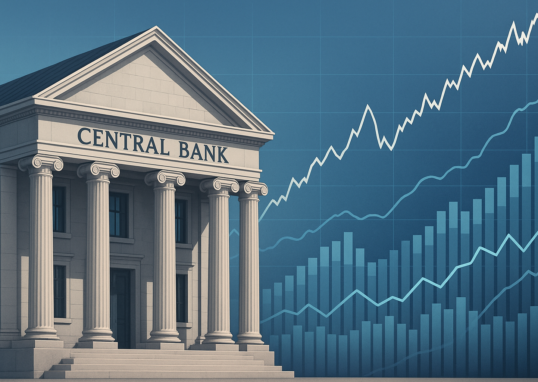
The Impact of Central Banks on Stock Markets: Navigating Interest Rates and Inflation
- 0
- 944 words
Introduction Understanding the intricate dance between central banks, interest rates, and stock markets is pivotal for investors aiming to maximize returns while...
Leia tudo
The Ripple Effect: Geopolitical Events’ Impact on Europe’s Economy
- 0
- 941 words
The Ripple Effect: Geopolitical Events’ Impact on Europe’s Economy Recent geopolitical events have stirred a wave of economic consequences across Europe. From...
Leia tudo
The Impact of Cryptocurrency on European Financial Markets
- 0
- 1.188 word
The rapid advancement of cryptocurrency has revolutionized many sectors, with European financial markets seeing significant transformation. This article aims to uncover the...
Leia tudo