

Unraveling the Impact of Central Banks on Stock Markets and Inflation
Understanding the intricacies of how central banks influence stock markets, interest rates, and inflation is critical for investors and economists alike. This article delves into the mechanisms of these influences and how they affect individual investing decisions and the broader financial environment.
- Central Banks’ Role in the Economy
- Interest Rate Policies and Their Impact
- Inflation Control Measures
- Stock Markets’ Reaction to Central Bank Policies
- Investor Perspective
Central Banks’ Role in the Economy
Central banks, such as the Federal Reserve in the United States or the European Central Bank (ECB), play a pivotal role in shaping economic stability. These institutions manage a country’s currency, money supply, and interest rates, often with the dual mandate of promoting maximum employment and stabilizing prices. With these tools, central banks can steer economic growth by influencing inflation and encouraging investment.
Their decisions are not made in a vacuum. For example, during the 2008 financial crisis, the Federal Reserve’s quick response with quantitative easing helped stabilize the economy by injecting liquidity into the financial system. Such interventions demonstrate the central banks’ immense power and responsibility.
Interest Rate Policies and Their Impact
Why Interest Rates Matter
Interest rates are arguably the most powerful tool at a central bank’s disposal. By raising or lowering rates, banks can control economic growth. Essentially, lower interest rates reduce the cost of borrowing, encouraging businesses to expand and consumers to spend. Conversely, higher rates can cool an overheating economy and control inflation by making borrowing costlier.
Practical Implications
Consider a scenario in 2025 where the ECB tightens rates to combat inflation spurred by rapid economic recovery. As borrowing costs rise, businesses might scale back expansion plans, slowing down hiring, and potentially impacting stock market expectations. Investors would react by reallocating assets, possibly moving from higher-risk stocks to bonds, which now offer higher returns.
Inflation Control Measures
The Inflation Target
A primary objective for many central banks is maintaining a stable inflation rate, typically around 2%. This target is believed to foster economic growth without allowing harmful levels of price rises.
In 2024, with global supply chain disruptions causing unexpected price hikes, central banks might intervene by adjusting interest rates or employing unconventional tools like quantitative easing to stabilize prices. Each move is analyzed meticulously, given the delicate balance required to support growth while containing inflation.
Effects of Central Bank Interventions
When a central bank successfully curtails inflation through well-timed interventions, it builds market confidence, leading to more predictable investment climates. Nevertheless, failure to act decisively can lead to hyperinflation or deflation, both of which pose significant risks to economies worldwide.
Stock Markets’ Reaction to Central Bank Policies
Stock markets are inherently sensitive to central bank policies. Investors closely monitor central banks for any hints of policy shifts, as these have direct implications on investment returns and economic stability. In times of anticipated policy changes, markets may experience volatility as traders speculate on future economic conditions.
Case Study: The Federal Reserve and Stock Market Volatility
Let’s explore the Federal Reserve’s impact on the stock market in 2024. Suppose the Fed signals potential rate hikes in response to inflationary pressures. This announcement might initially cause stock prices to drop as investors anticipate reduced corporate profits due to higher borrowing costs. Over time, however, as inflation stabilizes, market confidence might rebuild, accompanied by a rebound in stock values.
Investor Perspective
For investors, understanding central bank policies is paramount. These institutions’ decisions on interest rates and inflation control can significantly influence market trends and investment portfolios.
Strategic Investment Adjustments
Investors should strategically adjust their portfolios in anticipation of central bank moves. In periods where rate hikes are imminent, reallocating assets from volatile stocks to more stable bonds might be wise. Conversely, during rate cuts, capitalizing on growth stocks could yield higher returns.
Diversification and Research
Diversifying investments across various asset classes—such as commodities, real estate, and international stocks—can hedge against potential losses from central bank actions. Additionally, staying informed about economic forecasts and central bank announcements enables investors to make proactive decisions.
Investors must keenly monitor central bank policies, adapt their strategies accordingly, and maintain diversified portfolios to navigate the complex influences on stock markets and inflation effectively.

Autor
Posts relacionados

Decoding the Financial Impact of Cryptocurrency: Understanding Bitcoin’s Role
- 0
- 988 words
Bitcoin and other cryptocurrencies have sparked endless discussions about their impacts on finance and the global economy. For those invested in financialcustom.com,...
Leia tudo
How Stock Markets React to Changes in Central Bank Interest Rates
- 0
- 962 words
The dynamic interplay between central bank interest rates and stock markets continuously captivates investors and economists alike. Understanding this relationship is not...
Leia tudo
Navigating Energy Prices, Stock Markets, and Government Spending in the UK and EU
- 0
- 797 words
The complexities of the economic landscape in the United Kingdom and the European Union have brought forward discussions on critical issues such...
Leia tudo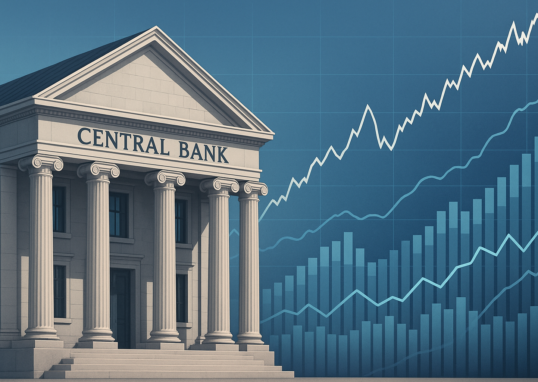
The Impact of Central Banks on Stock Markets: Navigating Interest Rates and Inflation
- 0
- 944 words
Introduction Understanding the intricate dance between central banks, interest rates, and stock markets is pivotal for investors aiming to maximize returns while...
Leia tudo
The Ripple Effect: Geopolitical Events’ Impact on Europe’s Economy
- 0
- 941 words
The Ripple Effect: Geopolitical Events’ Impact on Europe’s Economy Recent geopolitical events have stirred a wave of economic consequences across Europe. From...
Leia tudo
The Impact of Cryptocurrency on European Financial Markets
- 0
- 1.188 word
The rapid advancement of cryptocurrency has revolutionized many sectors, with European financial markets seeing significant transformation. This article aims to uncover the...
Leia tudo