
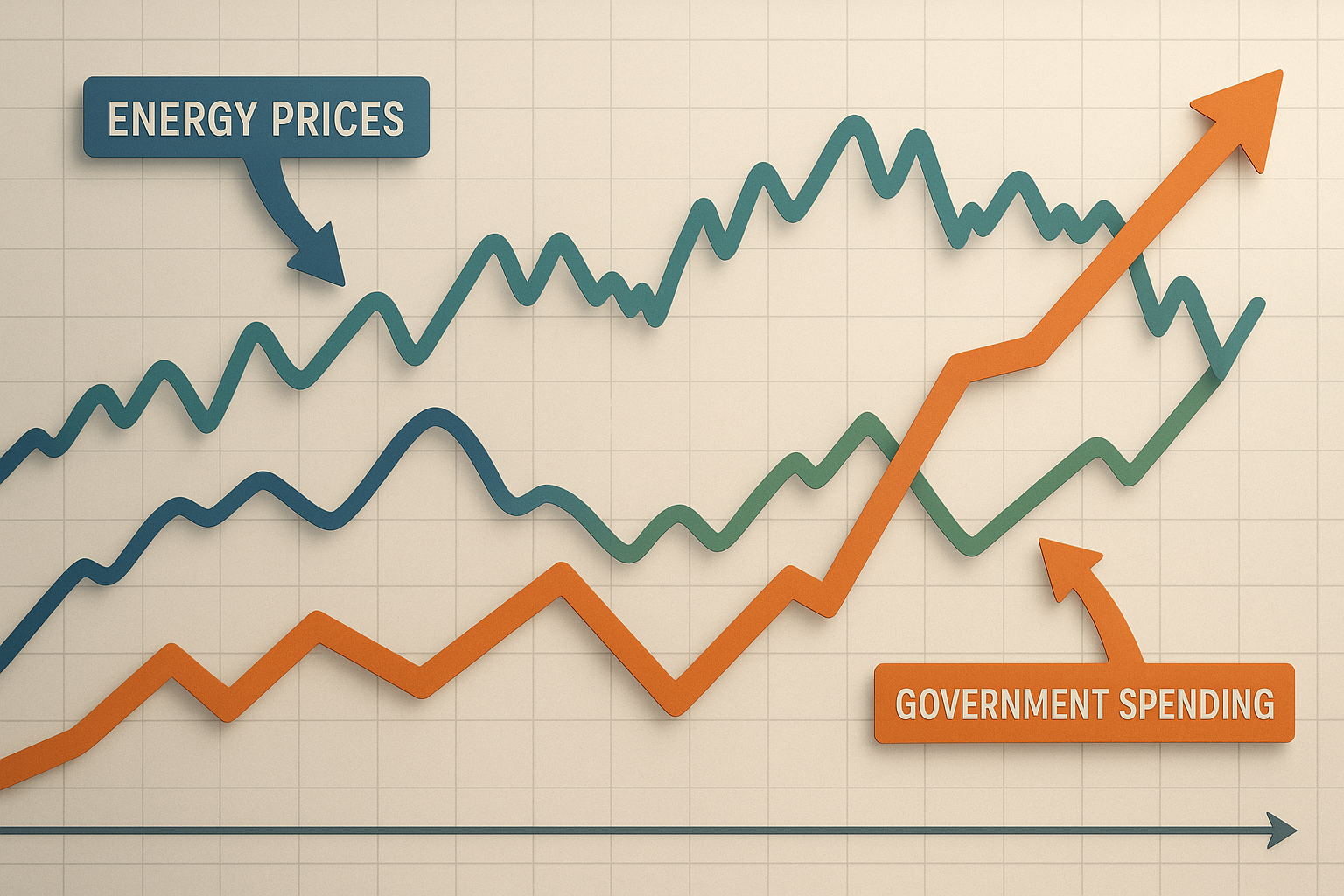
Navigating Energy Prices, Stock Markets, and Government Spending: A Comprehensive Guide
Understanding the intricate relationship between energy prices, stock markets, and government spending is crucial for anyone looking to bolster their financial acumen. As these elements significantly impact global economies, comprehending their interplay can aid both novice investors and seasoned economists.
- The Impact of Energy Prices on the Economy
- The Relationship Between Energy Prices and Stock Markets
- Government Spending: A Catalyst in the Economic Equation
- Case Study: Historical Interactions and Predictions
- Strategies for Investors
- Frequently Asked Questions
- Conclusion
The Impact of Energy Prices on the Economy
Energy prices dictate the cost of living and can spark inflationary cycles. Rising prices increase production costs, affecting everything from goods manufacturing to transportation, essentially making everyday life more expensive. When I studied the 2008 energy crisis, it was evident that rising oil prices triggered inflation, subsequently slowing economic growth.
Supply and Demand Dynamics
In 2025, energy demand projections anticipate a growth rate of approximately 2% annually due to burgeoning industrial expansion in Asia. This demand surge, juxtaposed with fluctuating oil supplies influenced by geopolitical events in regions like the Middle East, can lead to volatile price changes. For example, when OPEC decided to limit production, prices surged, impacting economies globally.
Renewable Energy: A Growing Influence
With the global shift towards renewable energy, 2024 has seen exponential growth in solar panel installations. This shift not only impacts traditional energy sectors but also can stabilize long-term energy costs. Government incentives for renewables have further curbed fossil fuel dependency, facilitating a market shift.
The Relationship Between Energy Prices and Stock Markets
The stock market often reacts swiftly to energy price changes. Whether through investor sentiment or actual financial impact, the correlation between these two components is profound.
Energy Sector Stocks
Investors keen on energy must closely monitor news from energy-centric companies like Chevron and ExxonMobil. Historical data from 2024 shows that minor price changes can lead to significant stock fluctuations in energy companies, impacting valuations.
The Broader Market Impact
When energy prices rise sharply, production costs soar, pinching profit margins across sectors. In the 2024 quarterly reports, several manufacturing giants reported decreased profits due to inflated energy costs. This domino effect trickles down, influencing overall market health.
Government Spending: A Catalyst in the Economic Equation
Government spending not only affects economic health directly but also influences energy prices and stock market dynamics. Fiscal policies can stabilize economies or, paradoxically, lead to increased market volatility.
Infrastructure Investments and Their Impacts
In 2023, the U.S. government allocated billions towards green infrastructure projects, promoting energy efficiency and reducing carbon footprints. This sort of strategic spending often stimulates job growth and counters economic slowdowns.
Monetary Policies
Through monetary policy, governments can influence inflation and interest rates, directly affecting both energy prices and stock market fluctuations. Historically, during periods of low interest rates, consumer spending increases, which can lead to higher energy consumption and potentially higher prices.
Case Study: Historical Interactions and Predictions
Analyzing previous energy price hikes, like those seen in 2014, we can glean insights into future patterns. During that period, stock markets initially stumbled but rebounded as economies adapted. It’s plausible that upcoming energy shifts in 2024 could follow a similar trajectory.
Data from External Links
According to International Energy Agency reports, energy consumption patterns are evolving, which might see new high-efficiency resources shaping market trends imminently.
Strategies for Investors
With this fluctuating financial landscape, investors need robust strategies to navigate energy price volatility, market changes, and government fiscal activities.
Diversified Portfolios
Investing in a mix of energy stocks, including both traditional oil and emerging renewables, can hedge against imbalances. By 2026, it’s expected that renewables will constitute at least 30% of energy portfolios.
Monitoring Government Policies
Keeping abreast of new government policies regarding energy can offer strategic entry points. When the EU announced incentives for wind energy in 2024, related stocks saw significant upticks.
| Year | Energy Price Trend | Stock Market Reaction |
|---|---|---|
| 2023 | Increase | Decrease |
| 2024 | Fluctuating | Volatile |
Frequently Asked Questions
How do energy prices affect inflation?
Rising energy prices increase production costs, leading to higher consumer prices across the board, which fuels inflation. As companies transfer their added expenses to consumers, the cost of goods and services rises, impacting household budgets and overall economic health.
Are stock markets always negatively impacted by high energy prices?
While high energy prices can pinch profits for energy-reliant industries, they can boost the earnings of energy sector stocks. However, overall market impact varies based on diversification and adaptability of industries affected by energy costs.
What role does government spending play in managing energy markets?
Governments can influence energy markets through fiscal policies, such as subsidies for renewables or taxes on carbon emissions. These strategies can direct investments towards sustainable energy solutions and manage demand across energy markets.
Can energy price stability improve economic growth?
Yes, stable energy prices provide a predictable cost environment for companies, supporting strategic planning and investments. They can significantly contribute to stable inflation rates, more robust economic growth, and enhanced consumer confidence.
Conclusion
Managing the intricate balance of energy prices, stock markets, and government spending requires astute analysis and strategic foresight. By understanding their intertwined nature, investors can better navigate economic trends and anticipate market movements. As seen with related articles on our site, staying informed and proactive ensures financial resilience amidst volatility.

Autor
Posts relacionados

Decoding the Financial Impact of Cryptocurrency: Understanding Bitcoin’s Role
- 0
- 988 words
Bitcoin and other cryptocurrencies have sparked endless discussions about their impacts on finance and the global economy. For those invested in financialcustom.com,...
Leia tudo
How Stock Markets React to Changes in Central Bank Interest Rates
- 0
- 962 words
The dynamic interplay between central bank interest rates and stock markets continuously captivates investors and economists alike. Understanding this relationship is not...
Leia tudoUnderstanding Market Movements and Regulatory Changes in Cryptocurrency
- 0
- 1.061 word
Introduction The world of cryptocurrency, led by Bitcoin, has become an intriguing yet complex field for investors and technologists alike. With rapid...
Leia tudo
The Impact of Central Banks on Stock Markets: Navigating Interest Rates and Inflation
- 0
- 944 words
Introduction Understanding the intricate dance between central banks, interest rates, and stock markets is pivotal for investors aiming to maximize returns while...
Leia tudo
The Ripple Effect: Geopolitical Events’ Impact on Europe’s Economy
- 0
- 941 words
The Ripple Effect: Geopolitical Events’ Impact on Europe’s Economy Recent geopolitical events have stirred a wave of economic consequences across Europe. From...
Leia tudo
The Impact of Cryptocurrency on European Financial Markets
- 0
- 1.188 word
The rapid advancement of cryptocurrency has revolutionized many sectors, with European financial markets seeing significant transformation. This article aims to uncover the...
Leia tudo