Introduction
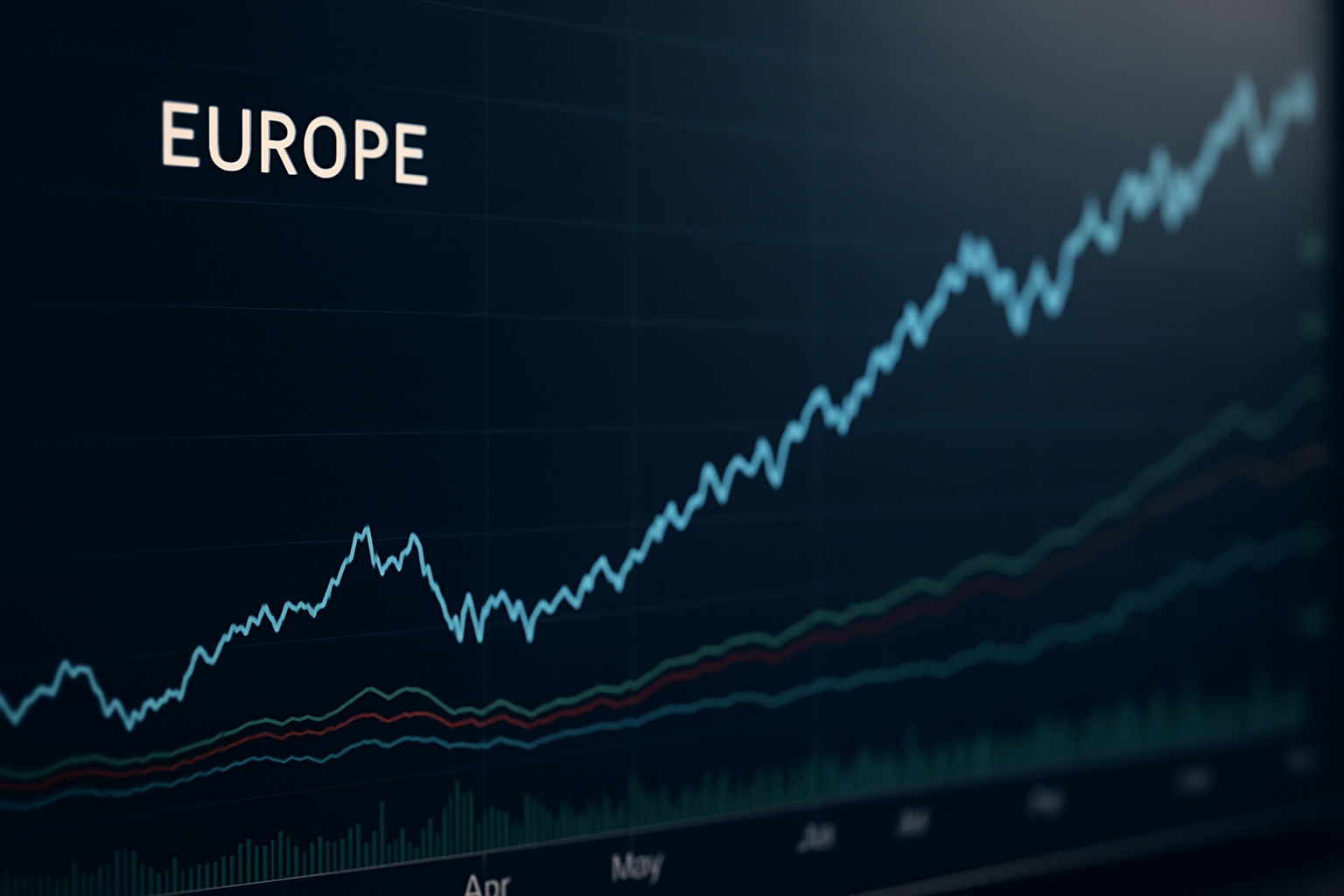
As Europe emerges from a period of economic uncertainty post-COVID-19, stock markets across the continent are navigating a complex landscape shaped by shifting interest rates, inflationary pressures, and central bank policies. Whether you’re a retail investor keen on leveraging opportunities or a finance professional making strategic decisions, understanding these dynamics is crucial for success in 2024 and beyond.
- Current Market Landscape
- Central Banks’ Influence
- Interest Rates and Inflation
- Investment Strategies for a Volatile Market
- Case Studies
- FAQ
- Conclusion
Current Market Landscape
Europe’s stock markets are a tapestry of diverse economies, each presenting unique investment opportunities. Key indices such as the DAX, CAC 40, and FTSE 100 have experienced volatility, largely influenced by macroeconomic factors like energy prices and geopolitical tensions.
According to the European Central Bank (ECB), the Eurozone’s GDP is projected to grow moderately in 2024. This growth accompanies a cautious optimism among investors, who are balancing potential gains against risks like climate change policy impacts and shifting consumer trends.
Macroeconomic Trends
Inflation has become a focal concern, with rates hovering above the ECB’s 2% target. This environment necessitates careful analysis, as high inflation can erode purchasing power, impacting consumer spending and business revenues.
Similarly, currency fluctuations, particularly the Euro-Dollar exchange rate, complicate international trade and investment decisions. Maintaining a global perspective is key to navigating these complexities effectively.
Central Banks’ Influence
Central banks in Europe, particularly the ECB and the Bank of England, wield significant power over market conditions through their policy decisions. Understanding their actions is critical to making informed investment choices.
ECB Policies and Market Impact
The ECB’s recent announcements indicate a gradual tightening of monetary policy. A move from negative interest rates marks a significant shift after years of accommodative policy. For investors, this signals a re-evaluation of high-yield assets and bonds.
Conversely, the Bank of England’s approach involves balancing rate hikes with economic stability concerns, especially given the uncertainties surrounding Brexit impacts on trade and investment.
Interest Rates and Inflation
Interest rates are the lifeblood of financial markets, influencing everything from mortgage payments to corporate borrowing costs. As rates rise, financial professionals must anticipate various market shifts.
Interest Rate Hikes
Retail investors should consider diversifying portfolios to hedge against interest rate risks. Historically, sectors like real estate and technology have shown varied reactions to rate changes, necessitating balanced asset allocations.
| Sector | Potential Impact |
|---|---|
| Real Estate | Possible slowdown due to higher mortgage costs |
| Technology | Increased volatility as borrowing becomes more expensive |
Inflation Tactics
For professionals, inflation represents both a threat and a planning consideration. Applying strategic inflation-protection measures, such as investing in commodities or TIPS (Treasury Inflation-Protected Securities), can guard portfolios against value erosion.
Investment Strategies for a Volatile Market
So, what strategies can retail investors and finance professionals adopt to thrive in current conditions? Here’s a deep dive into some effective approaches.
Diversification
Spreading investments across diverse asset classes can mitigate risks associated with any single market downturn. Emphasizing global diversification also reduces exposure to localized economic changes.
Utilizing Derivatives
Derivatives like futures and options provide flexibility in hedging against unpredictable market movements. Learning to leverage these tools can offer substantial risk management benefits.
Focus on ESG
Environmental, Social, and Governance (ESG) investing isn’t merely a trend—it’s reshaping investment landscapes. Aligning with sustainable and ethical practices can enhance long-term portfolio stability.
Case Studies
To illustrate how these concepts play out in real scenarios, let’s examine two case studies involving prominent European companies.
Case Study 1: Renewable Energy Company
A leading renewable energy firm leveraged EU green policies to drive investment growth. By prioritizing innovation and cutting-edge solar technologies, it adapted to regulatory changes efficiently.
Investors focusing on green energy can learn from this model, balancing initial capital outlay with sustaining cash flows through government incentives.
Case Study 2: Luxury Brand Expansion
An iconic luxury brand combated inflationary pressures by expanding digital platforms, focusing on unique customer experiences, and decreasing operational costs using AI-driven logistics.
This example highlights the importance of digital transformation in retaining competitive advantage while navigating inflation.
FAQ
What are the main factors affecting Europe’s stock markets in 2024?
Main factors include economic recovery trajectories post-COVID-19, inflation rates, central bank policies, and geopolitical developments like Brexit and climate action strategies.
How do interest rate changes impact retail investors?
Rising interest rates can increase borrowing costs and influence stock valuations. Investors might pivot toward more stable, high-dividend stocks or fixed-income securities to cushion against volatility.
Why is understanding central bank policies essential for investors?
Central banks directly influence monetary conditions and economic stability. Insight into their policy direction helps investors anticipate market changes and adjust strategies accordingly.
Are ESG investments genuinely advantageous?
Yes, ESG investments can offer financial returns alongside positive societal impacts. They often attract conscious investors keen on responsible investing, aligning personal values with financial goals.
Conclusion
In an era marked by economic recovery and transformation, understanding the intersection of macroeconomic factors, market dynamics, and investment strategies is essential for any financial professional or retail investor. With the right insights and approaches, navigating Europe’s evolving financial landscape becomes an opportunity rather than a challenge.
Incorporating knowledge from existing themes on our site such as investment diversification and inflation hedging techniques will further enhance your approach to successful investing in these unpredictable times.

Autor
Posts relacionados
Decoding the Financial Impact of Cryptocurrency: Understanding Bitcoin’s Role
- 0
- 988 words
Bitcoin and other cryptocurrencies have sparked endless discussions about their impacts on finance and the global economy. For those invested in financialcustom.com,...
Leia tudo
Navigating Energy Prices, Stock Markets, and Government Spending in the UK and EU
- 0
- 797 words
The complexities of the economic landscape in the United Kingdom and the European Union have brought forward discussions on critical issues such...
Leia tudo
The Impact of Central Banks on Stock Markets: Navigating Interest Rates and Inflation
- 0
- 944 words
Introduction Understanding the intricate dance between central banks, interest rates, and stock markets is pivotal for investors aiming to maximize returns while...
Leia tudo
The Ripple Effect: Geopolitical Events’ Impact on Europe’s Economy
- 0
- 941 words
The Ripple Effect: Geopolitical Events’ Impact on Europe’s Economy Recent geopolitical events have stirred a wave of economic consequences across Europe. From...
Leia tudo
The Impact of Cryptocurrency on European Financial Markets
- 0
- 1.188 word
The rapid advancement of cryptocurrency has revolutionized many sectors, with European financial markets seeing significant transformation. This article aims to uncover the...
Leia tudo
How Central Banks Influence Stock Markets Through Interest Rates and Inflation
- 0
- 1.055 word
The intricate dance between central banks and stock markets is crucial for any savvy investor to understand. At the heart of this...
Leia tudo