
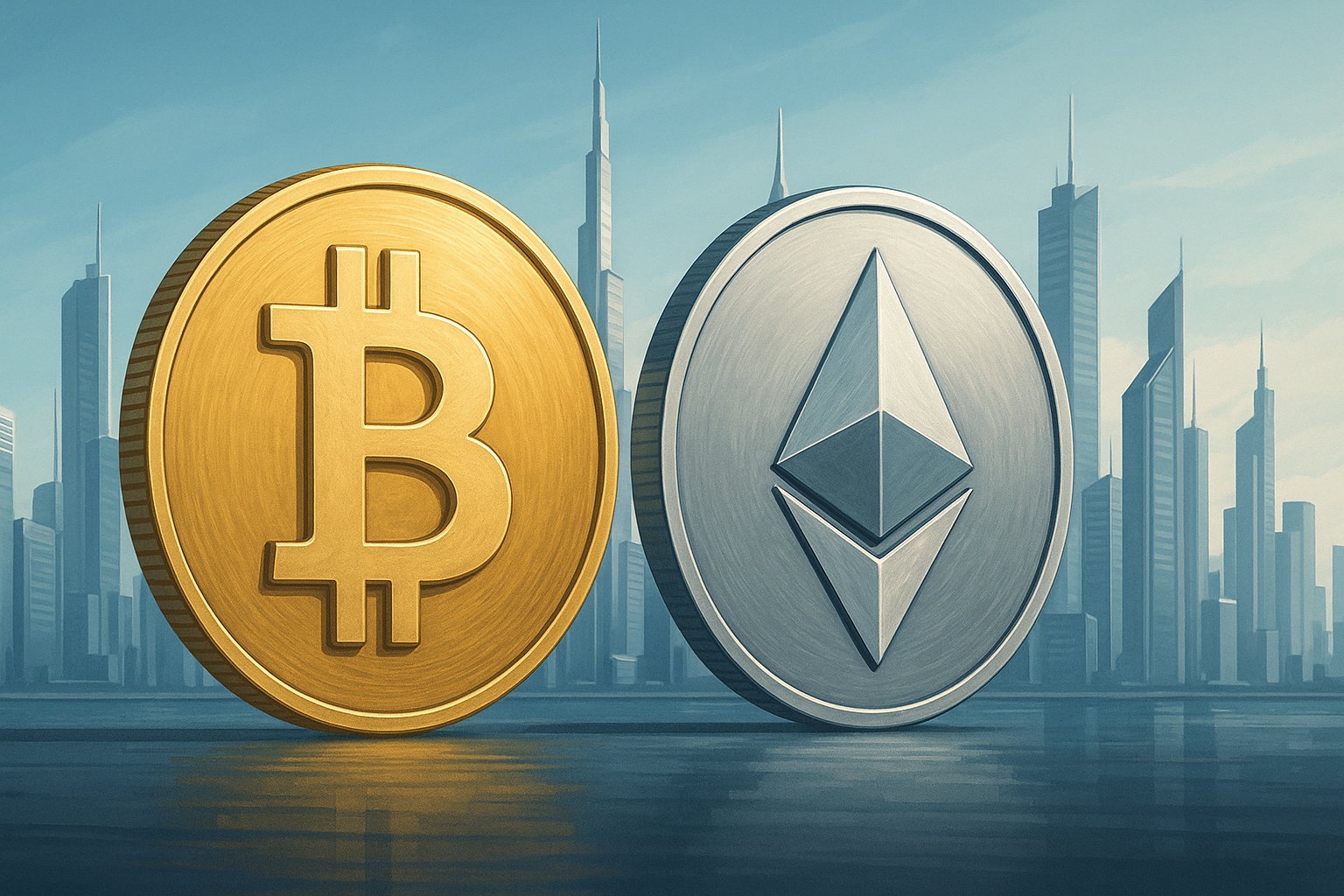
Exploring Bitcoin, Ethereum, and Emerging Cryptocurrency Trends
The cryptocurrency landscape is evolving, impacting both new and seasoned investors. At the forefront of this evolution are Bitcoin and Ethereum, with new trends shaping future financial systems. Let’s break down their roles and what lies ahead for cryptocurrencies.
- Bitcoin: The Digital Gold
- Ethereum: The Smart Contract Pioneer
- Emerging Cryptocurrency Trends
- Investment Strategies
- Common Questions
- Conclusion
Bitcoin: The Digital Gold
Bitcoin remains synonymous with cryptocurrency. Introduced in 2008 by the pseudonymous Satoshi Nakamoto, it promised a decentralized currency free from governmental control. By 2026, it’s crucial to understand Bitcoin’s role not as a mere speculative asset but as a hedge against inflation. The Bitcoin supply is capped at 21 million, enhancing its scarcity and appeal as a ‘digital gold’.
As new investors seek stability in troubled economies, Bitcoin’s resilience is highlighted. Long-term holders argue it’s more than a financial instrument—it’s a cultural revolution. Despite market volatility, Bitcoin continues to dominate 40% of the crypto market capital as of 2024.
Discover more on Bitcoin’s impact on global finance.
Ethereum: The Smart Contract Pioneer
Ethereum, launched by Vitalik Buterin in 2015, stands out with its platform for decentralized applications (DApps). Unlike Bitcoin, Ethereum’s purpose extends beyond currency, emphasizing ‘smart contracts’—self-executing agreements coded on its blockchain.
Ethereum’s continued shift towards energy-efficient models, illustrated by the completion of the “Ethereum 2.0” upgrade in 2024, made it a more sustainable choice for developers and businesses alike. This evolution aligns with global ESG (Environmental, Social, Governance) standards, attracting institutional investments.
With DApps enhancing crypto functionalities from decentralized finance (DeFi) to non-fungible tokens (NFTs), Ethereum’s utility skyrockets. This diversification appeals not only to tech-savvy developers but also to investors seeking innovation within traditional business models.
Learn more about Ethereum’s latest innovations.
Emerging Cryptocurrency Trends
Several key advancements are influencing the crypto space:
Central Bank Digital Currencies (CBDCs)
Several countries, including China and Sweden, have launched trial phases of CBDCs as a digital representation of their fiat currencies. This move integrates blockchain transparency with state-backed stability. As of 2024, over 80% of central banks are researching or developing a CBDC, signifying a paradigm shift towards digital currency acceptance.
DeFi and Traditional Finance Merging
Decentralized finance reshapes traditional banking by offering peer-to-peer lending and automated transactions via smart contracts. This integration showcases lowered transaction costs and enhanced accessibility, a transformative trend for underbanked populations.
However, the decentralized ecosystem isn’t without risks, such as potential smart contract vulnerabilities highlighted in academic research from Stanford University.
Regulatory Developments
Regulations remain a dual-edged sword—while they offer legitimacy and safety nets, innovators fear stifled progress. The SEC’s guidelines on crypto assets are expected to evolve significantly by 2025. Understanding and adapting to such changes will be crucial for sustainable growth.
Read about the latest regulatory changes in crypto.
Investment Strategies
Investing in cryptocurrency requires a nuanced approach. Here are practical strategies to consider:
Diversification
Maintaining a balanced portfolio is key. While Bitcoin and Ethereum are staples, consider diversifying with emerging altcoins like Solana or Avalanche, noted for their scalable solutions.
Risk Management
Given crypto’s volatility, set clear investment goals. Use techniques like Dollar Cost Averaging (DCA) to mitigate market fluctuations. DCA involves regularly investing a fixed amount of currency, smoothing out market drops.
Educated Decisions
Stay informed on market trends. Engage with online courses, platforms like Coursera, or communities such as Reddit’s r/cryptocurrency for peer insights and expert advice.
Common Questions
Is Bitcoin a safe investment in 2024?
Bitcoin’s perceived safety varies among investors. As of 2024, it’s seen as a hedge against inflation, akin to gold. Its established presence in the market offers relative stability, yet risks like regulatory changes and market volatility persist.
How is Ethereum different from Bitcoin?
While Bitcoin is primarily a store of value, Ethereum enables smart contracts, facilitating decentralized applications. This gives Ethereum more utility beyond being a currency, making it appealing for innovation-driven projects.
What future trends should new crypto investors watch?
Keep an eye on the rise of CBDCs and ongoing DeFi developments. Both trends will significantly influence the market, bringing both opportunities and challenges. Additionally, regulatory advances will shape how cryptocurrencies integrate with traditional finance.
How to start investing in cryptocurrencies?
Begin by researching and understanding the risks and benefits. Choose a reputable cryptocurrency exchange, secure your investments with hardware wallets, and adopt a strategy focused on long-term gains rather than short-term profits.
Conclusion
Bitcoin, Ethereum, and burgeoning cryptocurrency trends showcase a dynamic shift in the financial world, blending technology with traditional investment principles. For investors on Financial Custom, understanding these dynamics is crucial for navigating the future landscape. With innovation and regulation shaping the path forward, staying informed remains your greatest asset.

Autor
Posts relacionados

Decoding the Financial Impact of Cryptocurrency: Understanding Bitcoin’s Role
- 0
- 988 words
Bitcoin and other cryptocurrencies have sparked endless discussions about their impacts on finance and the global economy. For those invested in financialcustom.com,...
Leia tudoUnderstanding Market Movements and Regulatory Changes in Cryptocurrency
- 0
- 1.061 word
Introduction The world of cryptocurrency, led by Bitcoin, has become an intriguing yet complex field for investors and technologists alike. With rapid...
Leia tudo
The Impact of Central Banks on Stock Markets: Navigating Interest Rates and Inflation
- 0
- 944 words
Introduction Understanding the intricate dance between central banks, interest rates, and stock markets is pivotal for investors aiming to maximize returns while...
Leia tudo
The Ripple Effect: Geopolitical Events’ Impact on Europe’s Economy
- 0
- 941 words
The Ripple Effect: Geopolitical Events’ Impact on Europe’s Economy Recent geopolitical events have stirred a wave of economic consequences across Europe. From...
Leia tudo
The Impact of Cryptocurrency on European Financial Markets
- 0
- 1.188 word
The rapid advancement of cryptocurrency has revolutionized many sectors, with European financial markets seeing significant transformation. This article aims to uncover the...
Leia tudo
How Central Banks Influence Stock Markets Through Interest Rates and Inflation
- 0
- 1.055 word
The intricate dance between central banks and stock markets is crucial for any savvy investor to understand. At the heart of this...
Leia tudo